Prices up, deals down: Dubai home market sees 6.8% rise amid sales slowdown
- Market overview
- Drivers behind price growth
- Understanding the sales slowdown
- Supply dynamics and inventory constraints
- Luxury segment outperformance
- Affordable and mid-market challenges
- Mortgage market and financing conditions
- Investor behavior and capital flows
- Interaction with the rental market
- Policy and developer responses
Market overview
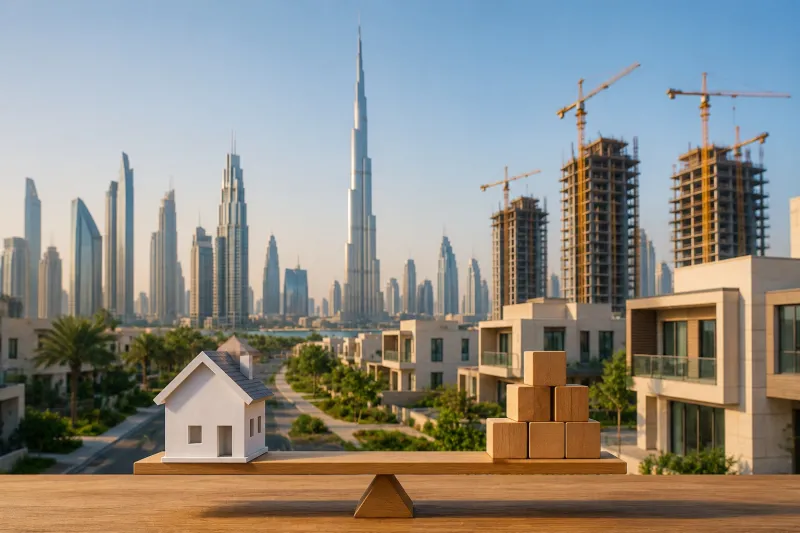
The headline figure a 6.8% rise in home prices underlines continued upward pressure on values across Dubai despite a measurable decline in the number of residential transactions. Price growth is not uniform: some submarkets and product types outperformed while others lagged, producing a patchwork market that requires granular analysis. Observers point to a mix of macroeconomic, local demand and supply-side factors driving these divergent trends.
Drivers behind price growth
Several core drivers explain why prices moved higher even with fewer purchases. Strong foreign interest, limited new completions in prime segments, and continued inflows of capital seeking yield or safety have all supported prices. In addition, pricing momentum from late-cycle demand and a compression of available high-quality stock pushed sellers to hold firm on ask prices, sustaining the upward trajectory.
Understanding the sales slowdown
Transaction volumes slowed for a variety of reasons: affordability pressures from higher borrowing costs, a seasonal lull in activity, and a rise in seller hesitancy as owners expect further appreciation. Institutional and individual buyers alike have become more selective, focusing on projects with strong fundamentals rather than speculative plays. This led to fewer, but often larger-value, completed deals.
Supply dynamics and inventory constraints
Supply-side conditions have tempered the market reaction. While a pipeline of projects continues to be delivered, many new units are concentrated in peripheral locations or in segments with weaker demand. At the same time, scarcity of well-located, ready-to-move-in stock has placed upward pressure on prices in established communities. Developers are recalibrating launch schedules to match the evolving appetite.
Luxury segment outperformance
The luxury segment was a notable outperformer, benefiting from offshore buyers and corporate relocations that favor premium villas and waterfront apartments. High-net-worth individuals seeking privacy, asset diversification and lifestyle amenities have driven demand for top-tier properties. As a result, price growth in luxury pockets often outstripped the broader market average.
Affordable and mid-market challenges
In contrast, the affordable and mid-market tiers experienced slower price appreciation and longer listing times. Buyers in these segments are more sensitive to financing costs and wage growth, which have constrained purchasing power. Developers targeting this band are increasingly offering payment plans and incentives to stimulate interest, but transactions remain selective.
Mortgage market and financing conditions
Rising global interest rates and tighter lending standards have influenced buyer behavior in Dubai. Higher mortgage costs have reduced maximum loan sizes for many buyers, pushing some to delay purchases or seek cash deals instead. Lenders are responding with tailored products and competitive pricing for creditworthy borrowers, but overall financing has become a gating factor for marginal buyers.
Investor behavior and capital flows
Investors remain a key pillar propping up prices. Some are motivated by rental yield opportunities, others by longer-term capital appreciation and regional diversification. The market has seen a mix of local, regional and international capital each group with different time horizons and risk tolerances which has helped sustain price levels even as transaction counts dipped.
Interaction with the rental market
The rental market continues to interplay with sales dynamics: rising rents in several neighborhoods have made purchase-to-let propositions more attractive and supported valuations, while in other areas softening rents reduced investor appetite. Landlord strategies, lease renewals and short-term tourism demand all feed into expectations for future income streams and thus influence sales pricing today.
Policy and developer responses
Policymakers and developers are adapting to the mixed signals. Regulatory tweaks, infrastructure investments and promotional residency or visa initiatives aim to keep Dubai competitive for talent and capital. Developers are increasingly focusing on product differentiation, flexible payment terms and targeted marketing to convert cautious buyers and align supply with the segments still showing robust demand.
Focused on delivering informative, accessible content