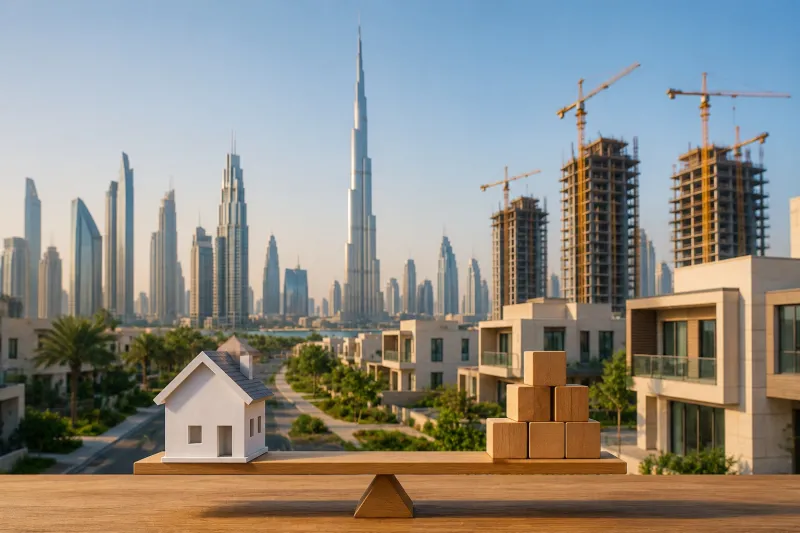
UAE property market shifts as Dubai and Abu Dhabi prices ease
- current market overview
- dynamics in the Dubai market
- trends in the abu dhabi market
- supply pipeline and new completions
- rental market and yield considerations
- buyer and investor sentiment
- policy, regulation and market support measures
- mortgage market and financing trends
- impact on different buyer segments
- practical considerations for buyers and renters
current market overview
The UAE housing market is recalibrating after a strong recovery post-pandemic. Across primary cities, headline prices and rents that surged in 2021–2023 have begun to ease, reflecting a mix of rising supply, changing demand patterns and more cautious investor sentiment. Market participants report longer listing times and more frequent price adjustments, particularly in mid- and high-end segments. While activity remains healthy, the pace of transactions is more measured than during the frenetic boom.
dynamics in the Dubai market
Dubai recorded some of the most pronounced gains during the recent upswing, driven by international demand, events and liberal ownership rules. Recently, however, price growth has slowed and in many submarkets nominal prices have declined slightly from peak levels. Off-plan activity remains significant but developers are adjusting payment plans and incentives to stimulate sales. The resale market shows more bargaining room for buyers, especially for larger apartments and older buildings away from prime waterfront locations.
trends in the abu dhabi market
Abu Dhabi's market has historically been more stable, and the current easing is part of a gradual normalization rather than a sharp correction. Government-led projects and steady employment in energy and public sectors continue to underpin demand. However, some peripheral communities are seeing slower absorption rates, pushing sellers to be more competitive on pricing and incentives. Luxury waterfront and central business district assets remain comparatively resilient.
supply pipeline and new completions
A growing pipeline of new developments is contributing to softer price momentum. Many projects launched during the boom are now reaching completion and entering the resale and rental markets, increasing choice for buyers and tenants. Developers are responding with longer payment plans, discounts and bundled offers to secure buyers. This addition to supply is particularly visible in apartment segments and master-planned communities.
rental market and yield considerations
Rents climbed sharply in recent years but have started to stabilize, with selective declines in some neighborhoods. Landlords are being more pragmatic on renewals as tenants gain leverage and relocate in search of value. Yields remain attractive relative to many global cities, but prospective investors are focusing more on net returns after factoring in service charges and vacancy risk. Short-term rental platforms still support higher gross returns in tourist-heavy zones, though regulatory scrutiny has increased.
buyer and investor sentiment
Sentiment among buyers and investors is shifting from fear of missing out to a more discerning approach. International buyers continue to view the UAE as a strategic gateway, yet they are negotiating more and seeking value buys. Institutional investors are selectively increasing allocations but prioritizing assets with stable cash flow and strong tenant profiles. Overall, the market is moving toward a quality-over-quantity preference.
policy, regulation and market support measures
Regulatory measures and economic policy are shaping market dynamics. Visa reforms, business-friendly licensing and residency incentives have bolstered long-term demand from expatriates and entrepreneurs. At the same time, tighter mortgage eligibility and stress-testing by lenders in certain segments are tempering speculative leverage. Authorities have also emphasized transparency and data publication to improve market efficiency and reduce asymmetric information.
mortgage market and financing trends
Financing conditions have become slightly more conservative after a period of easy credit. Banks are adjusting loan-to-value ratios, pricing and borrower assessment criteria to reflect rising interest rate backdrops in global markets. That has increased the importance of deposit levels and creditworthiness for buyers. Nevertheless, competitive mortgage packages remain available for qualified borrowers, and selective mortgage incentives from developers continue to stimulate absorption.
impact on different buyer segments
Different buyer segments are feeling the market shift in distinct ways. End-users and long-term owner-occupiers find better negotiation opportunities and wider choices. Buy-to-let investors are recalibrating return expectations and focusing on supply-constrained micro-locations. Speculative short-term investors face greater risk as price momentum cools and financing becomes more cautious. Expatriates seeking relocation prioritize rental flexibility and proximity to employment hubs.
practical considerations for buyers and renters
Those entering the UAE market now should conduct careful due diligence and tailor decisions to their horizons.
- Buyers: assess total cost of ownership, verify developer track record and compare resale versus off-plan offers.
- Renters: negotiate lease terms, consider flexible leases and evaluate service charges.
- Investors: stress-test yields under higher vacancy and interest-rate scenarios, and prioritize locations with strong fundamentals.
Being informed about supply pipelines, regulatory updates and financing conditions will be key to making prudent choices.
Focused on delivering informative, accessible content