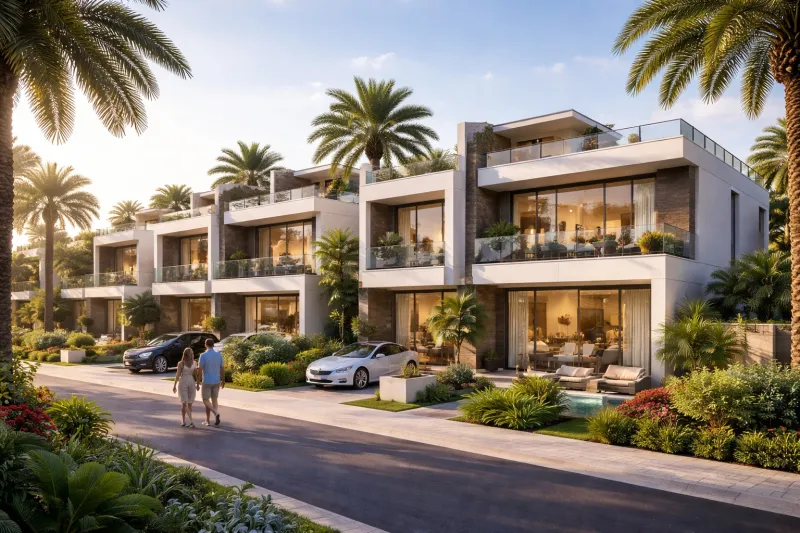
Lifestyle shift fuels surge in demand for family villas and townhouses
Across many markets, a pronounced shift in buyer preferences is driving stronger demand for family villas and townhouses. Buyers are prioritizing space, privacy, and community amenities that support remote work, childcare, and an active lifestyle. This article examines the main forces behind the trend and how developers, planners and investors are responding.
- Changing family priorities
- Remote work reshaping space requirements
- Growing desire for outdoor private space
- Value and long-term investment appeal
- Proximity to schools and community amenities
- Multi-generational living driving layout innovation
- Health, safety and wellness priorities
- Urban-to-suburban migration trends
- Design flexibility and customization options
- Policy, financing and market implications
Changing family priorities
Households are re-evaluating what they need from a home. Larger, flexible living areas, extra bedrooms for home offices or guest rooms, and dedicated recreation spaces are now higher on the checklist than a flashy urban address. Families want practical layouts that accommodate daily routines, from study corners for children to storage for sports and hobby equipment.
Remote work reshaping space requirements
With remote and hybrid work models firmly entrenched, the demand for a quiet, private workspace within the home has surged. Villas and townhouses typically offer separate rooms and quieter surroundings compared with apartment living, enabling households to create professional work environments without commuting. Developers are responding with floorplans that include larger studies, soundproofing options and reliable high-speed connectivity.
Growing desire for outdoor private space
Private gardens, terraces and small yards have become highly desirable as families seek safe outdoor spaces for children and pets. Unlike shared communal open areas, private outdoor spaces provide control over cleanliness, scheduling and security. Many buyers are willing to pay a premium for properties where indoor-outdoor flow supports gardening, alfresco dining and play areas.
Value and long-term investment appeal
Villas and townhouses often present perceived better value per square meter compared to central-city apartments. For many buyers, the combination of space, potential for customization and lower maintenance costs translates into a strong long-term investment. Mortgage calculators and market forecasts increasingly show that family-oriented homes can preserve wealth through stable demand and slower depreciation in suburban contexts.
Proximity to schools and community amenities
Access to quality schools, childcare, parks, and medical services remains a top priority for families. Townhouses and villas located in well-planned neighborhoods often cluster around these essential amenities, creating walkable, family-friendly environments. Developers are emphasizing integrated community planning, playgrounds, local retail, and green corridors to attract buyers seeking convenience and social infrastructure.
Multi-generational living driving layout innovation
Multi-generational households are on the rise, influencing the demand for homes with flexible, multi-suite configurations. Villas and larger townhouses lend themselves to separate living zones, granny flats, or annexes that allow extended families to live together while maintaining independence. Architects are designing with adaptable partitions, separate entrances, and independent utilities to support these arrangements.
Health, safety and wellness priorities
Post-pandemic concerns about ventilation, cleanliness, and access to nature have pushed buyers toward lower-density housing. Villas and townhouses often provide better natural ventilation, more sunlight, and proximity to open green spaces. Developers market wellness features, such as air filtration, private outdoor areas, and materials that are easy to clean, as selling points that resonate strongly with family buyers.
Urban-to-suburban migration trends
Many families are relocating from dense urban cores to suburban or peri-urban areas where villas and townhouses are more common and affordable. Improved transport links and the acceptance of hybrid work make longer commutes more manageable, and buyers often trade centrality for space and community. This migration has shifted price dynamics and spurred new developments at the edges of metropolitan regions.
Design flexibility and customization options
Unlike many high-rise apartments with fixed layouts, villas and townhouses offer opportunities for personalization, extensions, garden landscaping, and interior reconfiguration. Buyers value the ability to tailor spaces to evolving family needs, from adding a home gym to converting a garage into a playroom. Builders are increasingly offering modular upgrade packages and customizable finishes to meet these expectations.
Policy, financing and market implications
Public policy and lending conditions play a significant role in shaping the trend. Incentives for family housing, changes in zoning that allow for higher-density townhome clusters, and mortgage products aimed at multi-generational borrowers all influence supply and affordability. Real estate professionals and local governments are watching how these factors interact as demand for family-oriented housing reshapes development priorities.
Focused on delivering informative, accessible content