Al Ain Oasis: why it’s a UNESCO World Heritage site
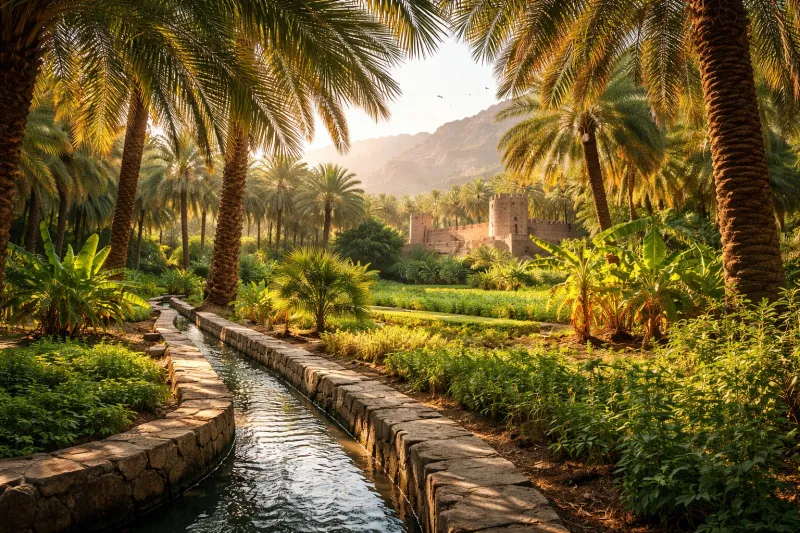
Al Ain Oasis in the United Arab Emirates is a living cultural landscape where ancient irrigation, traditional agriculture and historic settlements converge. Recognized by UNESCO, the oasis demonstrates how human ingenuity adapted to an arid environment for millennia; its groves, water channels and archaeological sites together tell a layered story of survival, community and continuity.
- History and archaeological importance
- Falaj irrigation and traditional water management
- Cultural landscape and oasis ecology
- Date palms and agricultural heritage
- Urban fabric and traditional settlement patterns
- World Heritage inscription and outstanding universal value
- Conservation efforts and sustainable management
- Visitor experience and interpretation
- Research, education and community involvement
History and archaeological importance
Al Ain Oasis sits within a broader archaeological landscape that includes Bronze Age tombs, Hafit period graves and Iron Age settlements. Excavations at nearby sites such as Hili have revealed monumental tombs, ancient fortifications and material culture that trace human occupation for several thousand years. These remains provide direct evidence of early sedentary life in the region and help explain how oasis systems enabled long-term settlement in an otherwise harsh desert environment.
Falaj irrigation and traditional water management
The oasis is defined by its traditional falaj (also spelled aflaj) irrigation network: gravity-fed channels that distribute groundwater from springs and shallow aquifers to plantations and homes. This communal system of water sharing and maintenance is both technically sophisticated and socially embedded, requiring coordinated upkeep and rules about allocation. Its persistence into the modern era exemplifies an adaptive, low-energy approach to managing scarce water resources.
Cultural landscape and oasis ecology
Al Ain Oasis is not simply an agricultural patch in the desert but a cultural landscape where human activity has shaped ecology. Dense stands of date palms, shade-tolerant understory plants and irrigated plots create a cooler microclimate and habitat pockets for birds and insects. The mosaic of cultivated and managed spaces reflects a balance between productive land use and the maintenance of ecological functions within an arid setting.
Date palms and agricultural heritage
Date palms are central to the oasis’s economy and identity. Farmers maintain multiple varieties for fresh consumption, drying, and market sale, and many traditional practices, such as manual pollination, selective pruning, and staggered harvesting, persist. These practices encode local knowledge about plant husbandry, soil management, and seasonality, making the palm groves both a resource and a living archive of agricultural heritage.
Urban fabric and traditional settlement patterns
The layout of Al Ain city grew around the maze of palm gardens and water channels: narrow alleys, courtyard houses, and compact neighbourhoods reflect a pattern of settlement that prioritizes access to water and shade. Traditional building materials, mudbrick and palm trunks, were chosen for their thermal properties and local availability. The spatial relationships among dwellings, farms, and public spaces illustrate how the oasis shaped social organization and daily life.
World Heritage inscription and outstanding universal value
UNESCO inscribed Al Ain (including its oases and associated archaeological sites) as a World Heritage property in recognition of its outstanding universal value as a testimony to ancient oasis-based societies and their water-engineering systems. The designation highlights the combined natural and cultural elements of irrigation networks, groves, settlements and tombs that together illustrate a continuous tradition of desert adaptation and land use.
Conservation efforts and sustainable management
Conserving Al Ain Oasis requires integrated approaches to heritage protection, water management and urban planning. Authorities and heritage bodies have undertaken restoration of historic structures, mapped falaj channels, and implemented zoning to protect core areas. Major challenges remain, including groundwater depletion, urban encroachment and the impacts of modern infrastructure. Effective management blends technical fixes with support for traditional practices and local stewardship.
Visitor experience and interpretation
As a World Heritage site, Al Ain Oasis is curated for visitors with shaded pathways, interpretive signage and designated walkways that explain the history and functioning of the falaj system. Nearby museums and forts complement the experience, offering archaeological displays and contextual narratives. Responsible tourism initiatives emphasize low-impact visitation and educational programming to foster appreciation without compromising the site’s integrity.
Research, education and community involvement
Ongoing archaeological research, environmental studies and collaboration with local communities sustain the knowledge base needed to manage the oasis. Universities and heritage agencies conduct fieldwork and publish findings, while community-based programs transmit traditional skills to younger generations. Public education, festivals celebrating dates and local crafts, and volunteer conservation activities all contribute to keeping the oasis a living, evolving heritage asset.
Focused on delivering informative, accessible content