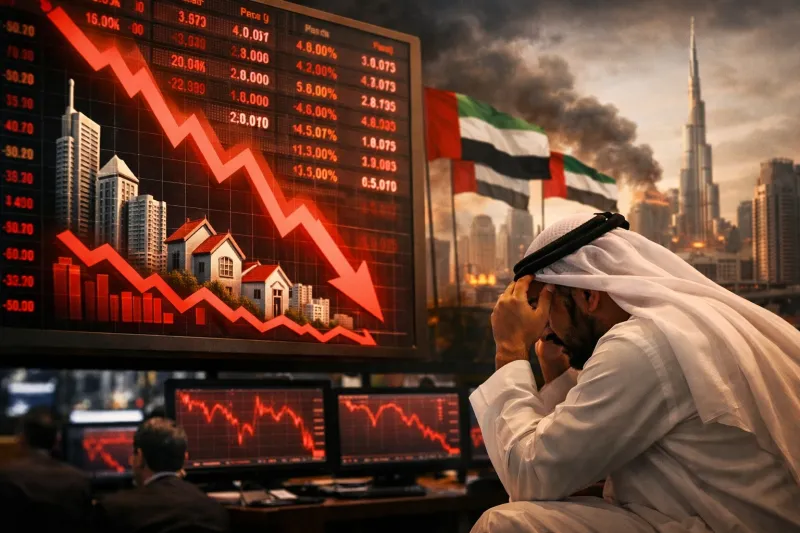
UAE property market at crossroads as Iran conflict shakes investor confidence
The escalation of conflict involving Iran has sent ripples through global markets, and the UAE real estate sector—long regarded as a regional safe haven—is facing renewed uncertainty. This article examines how geopolitical tensions are affecting investor sentiment, transactions, development pipelines and policy responses across Dubai, Abu Dhabi and the wider emirates.
- Immediate market reaction
- Investor sentiment and risk aversion
- Differences between Dubai and Abu Dhabi
- Foreign buyer behavior
- Impact on the rental market
- Developers and project pipelines under pressure
- Financing, lending and credit conditions
- Government and regulatory responses
- Short-term scenarios and market segmentation
- How stakeholders are adapting
Immediate market reaction
Financial markets responded quickly to news of heightened tensions, with short-term volatility reflected in property listing activity and pricing inquiries. Brokers reported an uptick in price reductions on secondary market listings and a slowdown in new off-plan reservations as buyers adopted a wait-and-see approach.
Investor sentiment and risk aversion
Investor sentiment has shifted toward risk aversion, particularly among international buyers who account for a large share of UAE transactions. Wealth preservation strategies such as moving capital into cash, gold, or liquid assets have become more common, reducing appetite for committing to longer-term real estate purchases.
Differences between Dubai and Abu Dhabi
While both cities feel the impact, Dubai's more internationally exposed market has shown greater short-term price sensitivity and transactional slowdown. Abu Dhabi's government-driven projects and state-backed liquidity have provided relative stability, though certain luxury and speculative segments are not immune.
Foreign buyer behavior
Foreign buyers from Europe, South Asia, and parts of East Asia are reassessing the timing and structure of deals. Some are postponing purchases, others are favoring shorter payment plans or reduced exposure via shorter lease terms. Residency-linked property purchases have seen particular scrutiny as visa and mobility concerns rise.
Impact on the rental market
Initial indicators suggest a softening in rents in certain micro-markets as expatriates delay relocations and corporate leasing strategies tighten. Landlords in tenant-heavy zones may offer concessions, flexible lease terms or furnished options to maintain occupancy amid weaker demand.
Developers and project pipelines under pressure
Developers face the combined pressure of slower sales and rising input costs, prompting some to defer launches or re-phase delivery schedules. Off-plan projects with pre-sales below thresholds could experience funding strain, while more established developers lean on balance-sheet liquidity and strategic partnerships.
Financing, lending and credit conditions
Banks and lenders are reassessing risk models amid heightened geopolitical risk. Tighter underwriting, higher down-payment expectations for non-resident buyers and slower mortgage approvals have emerged in some institutions. At the same time, competition to win high-quality borrowers keeps some credit lines accessible.
Government and regulatory responses
Authorities are signaling readiness to support market stability through targeted measures. Possible actions include liquidity support for strategic developers, incentives to boost rental market flexibility and communication campaigns aimed at reassuring investors about the UAE's security and regulatory framework.
Short-term scenarios and market segmentation
Analysts outline several near-term scenarios: a shallow correction driven by sentiment, a prolonged slowdown if conflict intensifies, or a rapid rebound if geopolitical tensions ease. Segmentation matters: affordable and mid-market housing may prove more resilient than ultra-luxury and speculative waterfront projects.
How stakeholders are adapting
Stakeholders are adapting through tactical measures: brokers are offering flexible contract terms, developers are adjusting product mixes toward mid-market and ready-to-move-in units, and institutional investors are recalibrating allocations to favor income-generating assets. Open communication and transparency have become key tools to retain buyer trust.
Focused on delivering informative, accessible content