Geopolitical shocks shake property markets as investors pull back
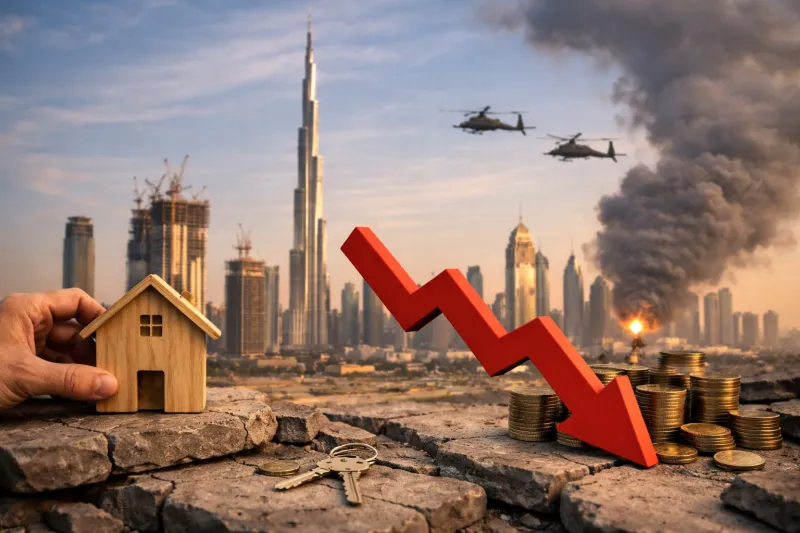
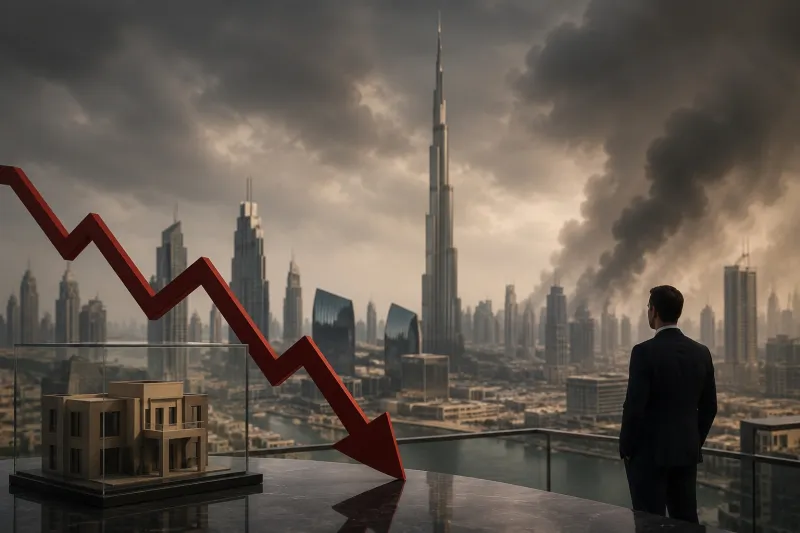
Geopolitical tensions—from regional conflicts to strained great-power relations—are increasingly filtering through to property markets worldwide. As uncertainty rises, investor confidence wavers, valuations are repriced and capital flows become more directional, forcing stakeholders across the real estate sector to reassess risk, liquidity and strategy.
- Rising geopolitical risk and market psychology
- Investor confidence and capital flows
- Risk premiums, yields and valuation pressure
- Residential markets: affordability and demand shifts
- Commercial real estate: office, retail and industrial dynamics
- Cross-border investment and capital controls
- Construction, supply chains and cost inflation
- Financing, insurance and liquidity constraints
- Policy responses and central bank considerations
- Strategic repositioning and risk management for investors
Rising geopolitical risk and market psychology
Geopolitical events act as powerful psychological shocks that change investor behavior almost immediately. Markets often move before fundamentals do: a spike in perceived geopolitical risk raises risk premia, prompts reallocation to perceived safe havens and shortens investment horizons. In property markets, where transactions are less frequent and information asymmetry is higher, sentiment-driven adjustments can create outsized moves in pricing and activity.
Investor confidence and capital flows
When geopolitical tensions escalate, cross-border capital flows can slow or reverse as investors de-risk portfolios. Foreign direct investment in large transactions declines, international funds delay closings and wealthy private buyers become more cautious. Currency volatility linked to geopolitical news also diverts capital toward liquid assets, leaving property deals competing for a smaller pool of available investment.
Residential markets: affordability and demand shifts
Residential property markets feel geopolitical effects through multiple channels. Foreign buyer restrictions or aversion reduce demand in previously popular investment hubs, while local buyers may delay purchases amid economic uncertainty. At the same time, rental markets can strengthen if households postpone buying, and affordability issues are exacerbated if geopolitical events push up energy or food prices, diverting household income away from housing.
Commercial real estate: office, retail and industrial dynamics
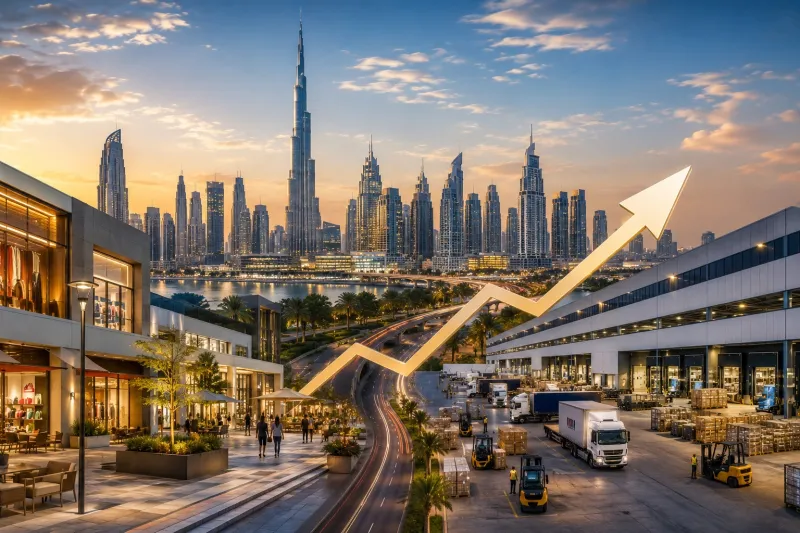
Different commercial sectors react differently to geopolitical stress. Offices face longer-term headwinds from workplace flexibilization and concentrated tenant risk, while retail remains sensitive to consumer confidence and cross-border tourism flows. Industrial real estate warehousing and logistics can show resilience or even benefit if companies onshore or diversify supply chains, increasing demand for distribution space close to end markets.
Cross-border investment and capital controls
Geopolitical friction often leads to regulatory responses that shape real estate flows: tighter investment screens, enhanced national security reviews and, in some cases, capital controls. These measures raise transaction costs and legal complexity, lengthen due diligence timelines and shift demand toward jurisdictions with clearer, more predictable rules. Sovereign wealth funds and state-backed investors may remain active, but private investors frequently adopt a more cautious stance.
Construction, supply chains and cost inflation
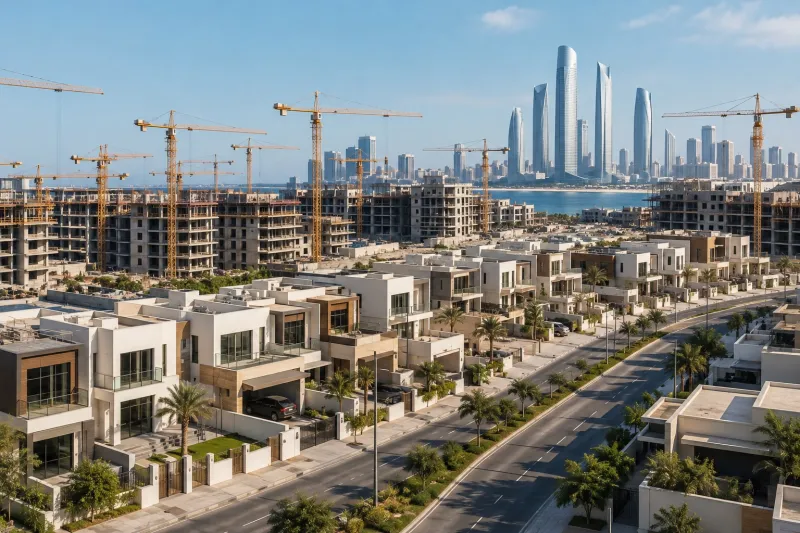
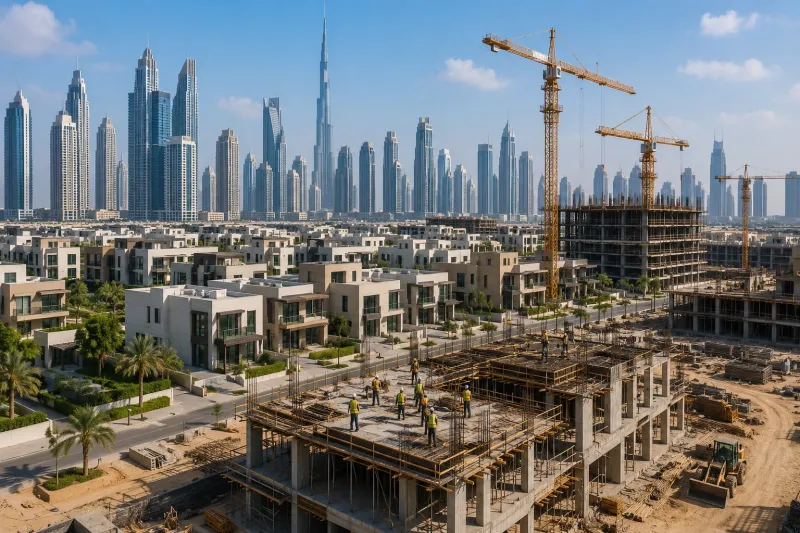
Geopolitical disruptions to trade routes, sanctions, or tariffs increase uncertainty in the construction supply chain. Materials and equipment costs can spike, deliveries become less reliable, and projects face timetable extensions. Developers responding to higher input prices may pause speculative builds, tighten project appraisal assumptions, or delay launches, reducing near-term supply but raising long-term delivery risk in some markets.
Financing, insurance and liquidity constraints
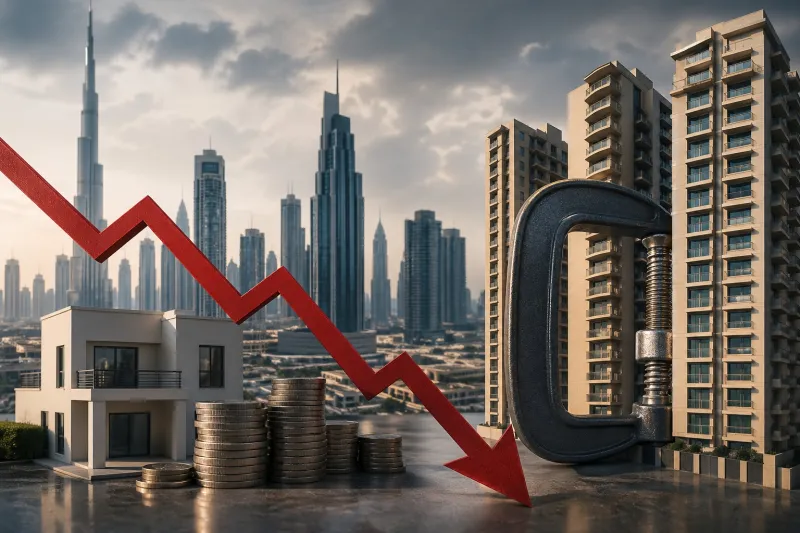
Lenders and insurers quickly reassess exposure when geopolitical risk climbs. Banks may widen spreads, shorten loan tenors or apply stricter covenants, squeezing leverage for buyers and developers. Insurance premiums for political risk, war and business interruption rise, adding to operating costs. Collectively, these constraints increase the cost of holding and transacting property, disproportionately affecting marginal projects and leveraged investors.
Policy responses and central bank considerations
Policymakers and central banks face trade-offs in responding to geopolitical-driven market stress. Monetary authorities may resist easing solely to offset asset-market weakness if inflation remains elevated, while fiscal interventions can target affected sectors housing support, infrastructure spending or expedited permitting to stabilize construction activity. Regulatory authorities may also adjust macroprudential measures to prevent a financing-driven downward spiral in property markets.
Strategic repositioning and risk management for investors
Investors are recalibrating portfolios in response to sustained geopolitical uncertainty. Common strategies include:
- Geographic diversification: shifting exposure toward jurisdictions with stronger rule of law and political stability.
- Sector rotation: favoring industrial and rental housing while de-emphasizing volatile retail or speculative office assets.
- Shorter lease profiles and flexible assets: improving liquidity and tenant adaptability.
- Hedging and covenant management: using FX hedges, stronger stress testing, and tighter covenant monitoring.
Active asset management, deeper scenario planning, and stronger stakeholder communication become essential to preserve value and navigate a more fragmented investment landscape.
Focused on delivering informative, accessible content