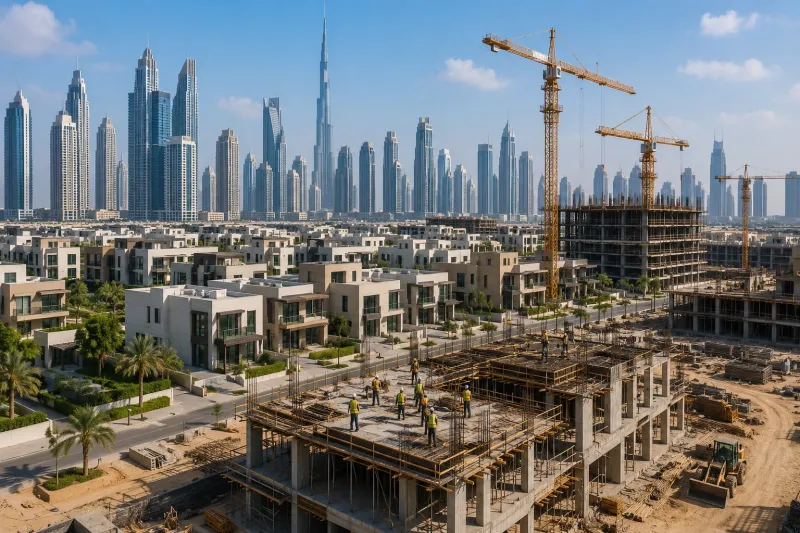
Abu Dhabi property market hits new milestone despite regional uncertainty
Abu Dhabi's real estate sector has reached a notable milestone this year, recording unprecedented activity even as geopolitical tensions and regional economic headwinds persist. The market's momentum reflects a blend of domestic policy support, renewed investor appetite and targeted supply, creating a complex but resilient picture for buyers, sellers and developers alike.
- Record transaction volumes mark a turning point
- Segmental performance shows a mixed but positive picture
- International investors demonstrate resilience
- Policy support and regulation underpin confidence
- Infrastructure and masterplans keep demand concentrated
- Rising rents lift yields and investor returns
- Banks and lenders recalibrate products and risk appetite
- Developers shift strategies amid uncertainty
- Regional risks remain but fundamentals are supportive
- Key indicators to watch in the coming quarters
Record transaction volumes mark a turning point
City and federal registries reported transaction volumes that have climbed to levels not seen in recent cycles, signaling heightened liquidity. Both freehold and leasehold segments contributed to the surge, with secondary-market trades and off-plan agreements accelerating across key neighborhoods. Market participants point to a combination of pent-up demand and renewed confidence among institutional buyers as the main drivers.
Segmental performance shows a mixed but positive picture
Not all parts of the market moved in lockstep: luxury waterfront properties and prime family villas outperformed many mid-market apartments, while certain submarkets experienced softer momentum. Commercial real estate saw selective recoveries in logistics and office spaces tied to corporate relocations, whereas some retail locations continued to adjust to changing consumer patterns.
International investors demonstrate resilience
Despite regional uncertainty, foreign capital flowed into Abu Dhabi with investors citing political stability, attractive yields and a favorable regulatory framework.
- High-net-worth individuals targeted luxury and trophy assets.
- Institutional investors increased allocations to late-stage residential projects and logistics.
- Buy-to-let demand from expatriates and diaspora buyers remained a steady source of activity.
Policy support and regulation underpin confidence
Recent government measures, including streamlined title registration, clearer landlord-tenant regulations, and investor-friendly visa schemes, have boosted market certainty. Mortgage reforms and incentives for first-time buyers also expanded the buyer base, while transparent procedures for foreign ownership helped sustain cross-border interest.
Infrastructure and masterplans keep demand concentrated
Major infrastructure investments and cultural destinations continued to shape demand patterns. Projects on Saadiyat, Yas Island and around the Corniche attracted both residential and hospitality development, reinforcing the appeal of mixed-use masterplans that combine leisure, education and transport links.
Rising rents lift yields and investor returns
Rental rates have trended upward in several prime and mid-tier neighborhoods, improving gross yields and making buy-to-let propositions more attractive. Landlords benefited from tighter vacancy rates in family-oriented communities, while purpose-built rental stock showed particularly robust demand from medium-term expatriate tenants.
Banks and lenders recalibrate products and risk appetite
Financial institutions responded to the market uptick by rolling out tailored mortgage products, adjusting loan-to-value ratios and introducing flexible repayment options for certain buyer segments. At the same time, risk management frameworks were tightened to account for inflationary pressures and potential interest rate volatility.
Developers shift strategies amid uncertainty
Developers adapted by prioritizing quality over scale, phasing deliveries and offering enhanced payment plans to mitigate demand swings. There was a noticeable pivot toward sustainability features and smart-home technologies as differentiators, and partnerships with international brands were used to attract global buyers.
Regional risks remain but fundamentals are supportive
Geopolitical tensions in the wider region created episodic volatility and a cautious tone among some investors, yet Abu Dhabi's macro fundamentals, sovereign wealth backing, fiscal buffers, and long-term infrastructure plans helped absorb shocks. Market commentators highlight that confidence is underpinned by strong liquidity and a stable policy environment.
Key indicators to watch in the coming quarters
Observers are monitoring several metrics to gauge sustainability: transaction volume trends, new supply completions, average rents, mortgage approval rates and tourist and expatriate inflows. Watchlists also include developer balance sheets, sovereign investment activity and any shifts in regional geopolitics that could quickly change sentiment.
Focused on delivering informative, accessible content